
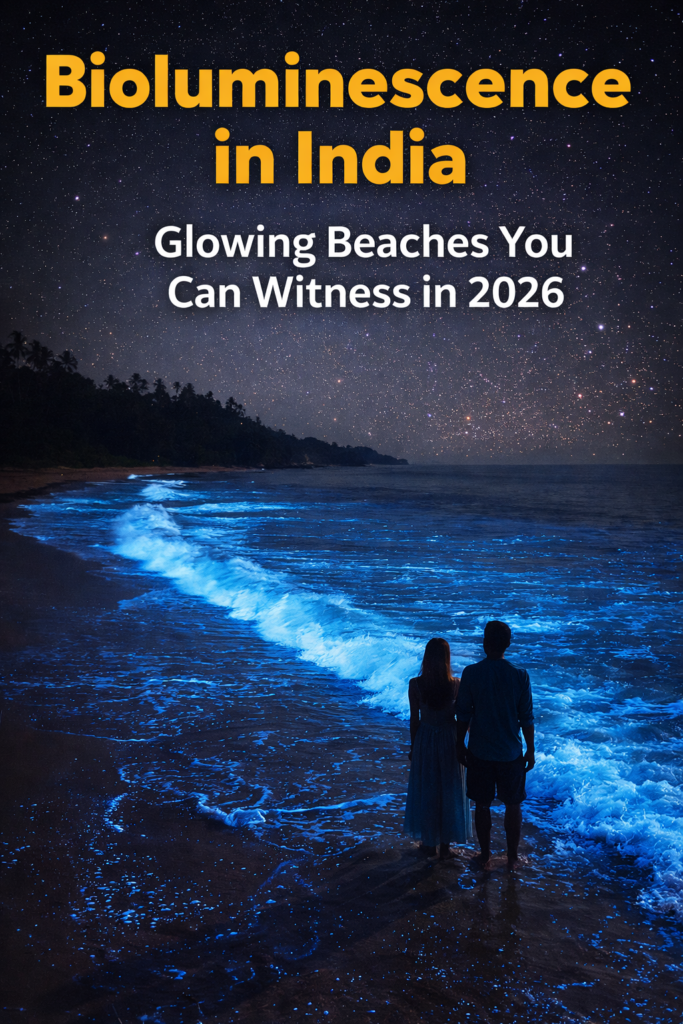
A Night When the Ocean Turned Blue
The first time I saw the sea glow, I thought someone had spilt stars into the water.
Each wave shimmered electric blue. Footsteps on wet sand left glowing trails. Even the gentle splash of a fishing boat created streaks of light. That surreal moment was my first encounter with bioluminescence in India — and it changed the way I look at our coastline forever.
Now, as 2026 travel trends point toward slow, mindful nature experiences, glowing beaches are becoming one of India’s most magical natural attractions.
What Is Bioluminescence? {#what-is-bioluminescence}
Bioluminescence is a natural phenomenon where living organisms emit light due to a chemical reaction. In oceans, this glow is usually caused by microscopic plankton called dinoflagellates.

According to Wikipedia’s explanation of bioluminescence, the light is produced when the molecule luciferin reacts with oxygen, creating visible blue light.
In coastal waters, these organisms glow when disturbed by:
- Waves
- Movement in water
- Boats
- Human footsteps
Therefore, the darker and calmer the night, the brighter the glow.
Why 2026 Is the Year to Witness Bioluminescence in India {#why-2026}
Travel trends are shifting.
In 2026, more Indian travellers are choosing:
- Sustainable coastal tourism
- Offbeat night experiences
- Nature-led wellness travel
Moreover, social media has amplified awareness of bioluminescence in India, especially through viral reels from Goa and Lakshadweep.
However, unlike artificial attractions, this phenomenon depends entirely on nature. That is why timing and responsible travel matter more than ever.
Best Places to See Bioluminescence in India {#best-places}
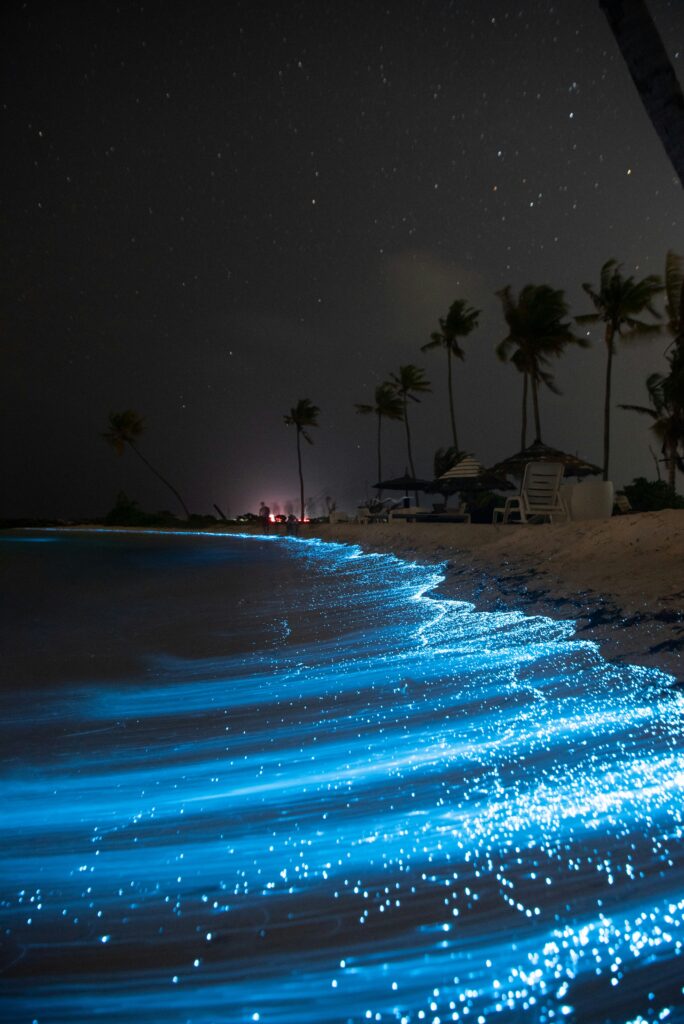
Although India is not widely known for glowing beaches like the Maldives, certain coastal regions have recorded seasonal blooms.
1. Bangaram Island, Lakshadweep {#bangaram}
If you want the clearest experience of bioluminescence in India, Lakshadweep is unmatched.
Bangaram Island offers:
- Minimal light pollution
- Crystal-clear waters
- Low tourist density
As per the official Lakshadweep Government tourism site, the region promotes eco-sensitive tourism, which helps preserve marine biodiversity.
On moonless nights, the shoreline sometimes glows intensely, especially between October and March.
Why it stands out:
- Remote island ecosystem
- Pristine marine life
- Controlled tourism
However, permits are required to visit Lakshadweep.
2. Betalbatim & Colva Beach, Goa {#goa}
Goa’s glowing shoreline has recently gone viral.
Between September and November, plankton blooms occasionally create visible blue waves. Several reports, including coverage by major Indian media outlets like Times of India, have documented these events.
Unlike Lakshadweep, Goa offers:
- Easy access
- Night beach walks
- Photography opportunities
However, the glow is unpredictable.
Therefore, visiting during the post-monsoon period increases your chances.
3. Chennai Coast (Thiruvanmiyur & Besant Nagar) {#chennai}
In recent years, Chennai’s beaches have surprised visitors with glowing waves.
After heavy rains or nutrient-rich ocean conditions, plankton blooms sometimes appear. These events are short-lived but spectacular.
Moreover, Chennai’s long coastline increases visibility opportunities compared to smaller beaches.
4. Alibaug, Maharashtra {#alibaug}
Yes, even Maharashtra has witnessed rare bioluminescent sightings.
If you’re planning a coastal getaway from Mumbai, you can explore this detailed guide:
→ https://natureroutes.in/alibaug-trip-from-mumbai-overview/
While bioluminescence in India is rare along the Konkan coast, occasional sightings after the monsoon have been reported by locals and travellers.
Therefore, combining a weekend trip with a night beach walk might reward you unexpectedly.
Best Time to See Glowing Beaches in India {#best-time}
Timing plays a crucial role.
| Factor | Ideal Condition |
|---|---|
| Moon Phase | New Moon (Amavasya) |
| Season | Post-Monsoon (Sept–Nov) |
| Time | After 8:30 PM |
| Weather | Calm, low wind |
| Light Pollution | Minimal |
Why moonless nights?
Because artificial and natural light reduces the visibility of the glow.
Moreover, plankton blooms are more common after nutrient-rich monsoon currents.
How to Experience Bioluminescence Responsibly {#responsible-travel}
While the sight is magical, the ecosystem is fragile.
To protect marine life:
- Do not collect glowing water in bottles
- Avoid using flashlights directly in water
- Do not litter
- Avoid chemical sunscreens before entering the sea
- Follow local authority guidelines
The United Nations Environment Programme (UNEP) highlights the importance of protecting marine ecosystems from pollution and overtourism.
Therefore, mindful travel ensures these glowing beaches remain visible for future generations.
Photography Tips for Capturing the Glow {#photography}
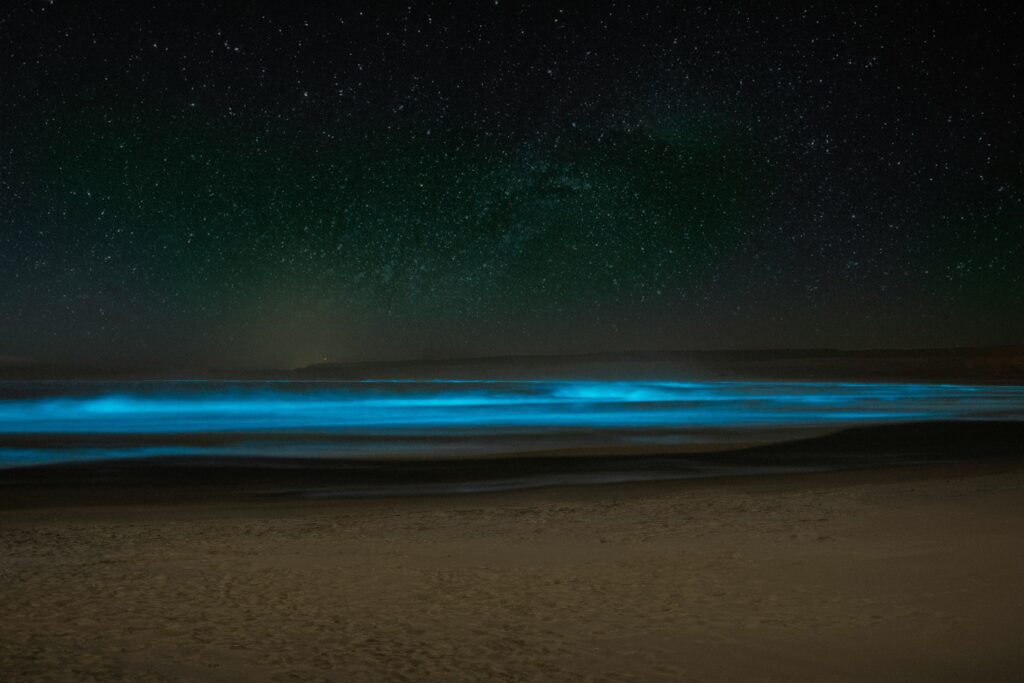
Capturing bioluminescence is challenging but possible.
Use These Settings:
- Tripod (essential)
- Long exposure (10–30 seconds)
- ISO 1600–3200
- Wide aperture (f/2.8 or lower)
However, avoid artificial lighting as it reduces contrast.
Pro Tip: Instead of photographing the entire ocean, focus on waves crashing or footsteps glowing in the sand.
Pros & Cons of Visiting During Peak Glow {#pros-cons}
| Pros | Cons |
|---|---|
| Rare, unforgettable experience | Unpredictable timing |
| Stunning photography opportunity | Weather-dependent |
| Requires a late-night visit | Can disappear overnight |
| Natural and chemical-free spectacle | Requires late-night visit |
Therefore, flexibility in travel plans increases your chances of witnessing the glow.
Safety & Environmental Considerations {#safety}
Is bioluminescence safe?
Generally, yes. Most plankton responsible for glowing waves are harmless. However:
- Avoid swimming during strong tides
- Follow local advisories
- Do not disturb marine life
According to marine biology studies, dinoflagellates glow as a defence mechanism. Therefore, excessive disturbance can harm the ecosystem.
Additionally, always check local government guidelines before night beach visits.
Nearby Spiritual & Coastal Extensions
If you are exploring Maharashtra, you can also combine your coastal visit with a cultural journey:
→ https://natureroutes.in/jejuri-religious-places/
Blending nature with heritage makes the trip more meaningful.
Why Bioluminescence in India Is a 2026 Travel Trend
Travellers today seek experiences over luxury.
Instead of crowded attractions, people prefer:
- Dark sky beaches
- Mindful night walks
- Nature-based travel
Moreover, glowing waves offer something rare — a reminder that nature still holds secrets.
Unlike theme parks or artificial light shows, bioluminescence is completely organic.
And that is exactly why it feels magical.
Conclusion: Will You Chase the Glow?
Bioluminescence in India is not guaranteed.
It cannot be booked.
It cannot be scheduled.
It cannot be controlled.
However, when the ocean lights up beneath your feet, it feels like nature is whispering something ancient.
So, as you plan your 2026 travels, consider stepping beyond the ordinary.
Because sometimes, the most unforgettable journeys happen after sunset.
Frequently Asked Questions
1. What causes bioluminescence in India?
Bioluminescence in India is caused by microscopic plankton called dinoflagellates that emit blue light when disturbed by waves or movement.
2. Which is the best place to see bioluminescence in India?
Lakshadweep, particularly Bangaram Island, offers the clearest and most consistent sightings.
3. When is the best time to see glowing beaches in India?
Post-monsoon months (September to November) during moonless nights provide the best chances.
4. Is bioluminescence dangerous?
Generally, no. Most glowing plankton are harmless, but swimming during strong tides should be avoided.
5. Can I predict bioluminescence events?
Not accurately. It depends on ocean conditions, plankton blooms, and weather patterns.
6. Is photography allowed?
Yes, but avoid flash and bright artificial lights to protect marine life.