

The first time I rounded a bend on the Manali-Kaza highway and saw Key Monastery perched against a bare ochre cliff, I understood why people call Spiti a world within a world. Rudyard Kipling had his own phrase for it. The landscape does not feel entirely real. It feels earned. Spiti Valley Summer: Complete Travel Guide 2026
Spiti Valley sits in the northeastern corner of Himachal Pradesh, tucked into the Tibetan plateau at an average elevation of 3,800 metres. For most of the year, it is sealed under snow. However, from May onwards, the passes unlock and Spiti’s summer reveals itself — a brilliant window when the cold desert blooms with wildflowers, migrant birds arrive at high-altitude lakes, ancient monasteries hum with activity, and the night sky turns a shade of deep blue that has no name in any colour chart.
This is the definitive guide for planning your Spiti Valley summer trip in 2026 — covering every route, every essential stop, altitude safety, a real budget breakdown, and the nature experiences that make Spiti unlike anywhere else in India.
1. What Is Spiti Valley — and Why Summer Is Its Best Season
Spiti Valley is a high-altitude cold desert river valley in the Lahaul and Spiti district of Himachal Pradesh. The Spiti River, a tributary of the Sutlej, runs through its heart. The valley sits between 3,500 and 4,500 metres above sea level, bordered by Tibet to the east, the Great Himalayan Range to the south, and the Kunzum and Rohtang passes to the west.

The valley’s climate is extreme. Winters last from November to March, with temperatures dropping to minus 30 degrees C and both main access routes sealed by snow. That leaves a productive window for summer travel — broadly May through September — during which Spiti transforms from an inaccessible fortress into one of the most extraordinary landscapes in Asia.
Furthermore, summer is when Spiti’s villages come alive. Local homestays open their doors, markets in Kaza stock up, monks begin teaching sessions at Key and Tabo monasteries, and Pin Valley National Park’s wildlife becomes easier to spot. Therefore, for nature travellers, summer is not just the convenient season — it is the ideal one.
Why Choose Spiti Over Other Himachal Hill Stations?
Shimla and Manali are beautiful — but they are no longer quiet. By June each year, traffic jams stretch for kilometres outside Manali. Spiti, in contrast, remains genuinely remote. Its infrastructure is intentionally limited, its roads demand patience, and its rewards are correspondingly deeper.
Additionally, Spiti offers something mainstream Himachal hill stations simply cannot: a living Tibetan Buddhist culture, a cold desert ecosystem found nowhere else in India at this scale, world-record-holding villages (Hikkim has the world’s highest post office; Komic is Asia’s highest motorable village), and a night sky so unpolluted that the Milky Way is visible with the naked eye on any clear night.
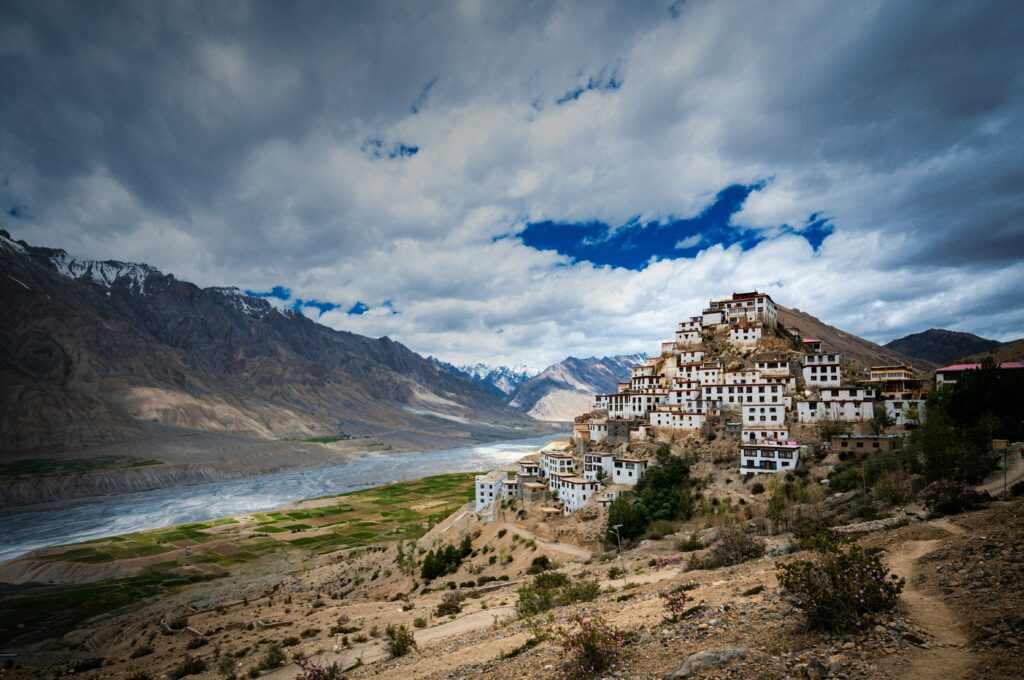
IMAGE SUGGESTION: Wide-angle morning photograph of Key Monastery on its hilltop above the Spiti River, shot from the valley floor at golden hour. Clear blue sky, bare ochre mountains in the background. Alt text: Key Monastery perched on a hilltop above Spiti Valley at sunrise, Himachal Pradesh.
2. Best Time to Visit Spiti Valley in Summer 2026
Not all summer months in Spiti are equal. Each period within the May-to-September window offers a different character, a different set of advantages, and different challenges. Understanding these differences will help you plan a trip that matches your travel style.
May to June: The Sweet Spot for Nature Travellers
May marks the beginning of Spiti’s accessible season via the Shimla-Kinnaur-Kaza route, which stays open year-round. Early May offers the valley in its most pristine form — with the Manali route opening only in June, tourist numbers remain low, allowing for a peaceful experience.
Daytime temperatures in Spiti Valley in summer stay between 15 and 20 degrees C. Nights drop to 5-10 degrees C, so layering is essential. However, the days are brilliant — long, clear, and perfect for photography and trekking. By early June, the Manali-Kaza route via Rohtang and Kunzum Pass begins to open (dependent on snowmelt), making the popular circuit journey possible.
July to August: Peak Season and Monsoon Caution
July and August are peak tourist months in Spiti. Both routes are fully open, homestays are at capacity, and local festivals bring communities together. The Ladarcha Festival, held in the third week of August near Kaza, is a rare and extraordinary cultural event — a traditional traders’ fair with folk dance, local crafts, yaks, and organic produce that has been running for centuries.
However, July brings increased landslide risk on the Manali-Kaza route. Build flexibility into your itinerary during this period — road closures of 12-48 hours are not uncommon. Spiti itself does not receive much monsoon rainfall, but lower Himachal Pradesh does, affecting the approach roads.
September to Early October: The Hidden Best Months
Seasoned travellers know that September is often the finest month in Spiti. Post-monsoon calm brings clear skies and fewer crowds. The light is extraordinary — lower in the sky, warmer in tone, and ideal for landscape photography. Wildlife sightings in Pin Valley also tend to improve as animals become more active before winter.
3. Routes to Spiti Valley: Shimla vs Manali Explained
There are two primary routes into Spiti Valley in summer. Choosing between them — or doing both as a complete circuit — depends on your timeline, experience level, and the time of year.
Route 1: Shimla to Kaza (via Kinnaur)
The Shimla route remains open for most of the year and is considered safer for first-time visitors. It passes through the stunning Kinnaur district — past Narkanda’s apple orchards, the dramatic Sangla Valley, Kalpa’s views of the Kinner Kailash massif, and the ancient desert village of Nako — before entering Spiti proper at Sumdo.
The route takes 2 to 3 days to drive comfortably, with recommended overnight stops at Sangla or Kalpa, and Nako or Tabo. The road climbs gradually, giving your body time to acclimatise to altitude — a significant advantage over the steeper Manali approach.
Shimla-Kaza Route Stops
Shimla > Narkanda > Rampur > Sangla > Kalpa > Nako > Giu > Tabo Monastery > Dhankar > Kaza
Route 2: Manali to Kaza (via Kunzum Pass)
The Manali-Kaza route is shorter in distance but dramatically more intense. It crosses Rohtang Pass (3,978m) — or the Atal Tunnel beneath it — and then climbs to the Kunzum Pass (4,551m) before descending into the Spiti Valley. The route stays open only from late June to mid-October.
The road quality between Gramphoo and Losar is among the most challenging in the country — a lunar landscape of rocks, stream crossings, and sudden drops. That said, the scenery is staggering, and most experienced Spiti travellers consider this route a rite of passage.
The Full Circuit Recommendation
Enter via Shimla (gradual acclimatisation, Kinnaur sightseeing), exit via Manali (iconic Kunzum Pass, Chandratal Lake). This is the classic Spiti circuit and the most rewarding way to experience both approaches.
INTERNAL LINK: For detailed trekking routes that begin before the Spiti entry, explore India’s https://natureroutes.in/jorhat-assam-travel-2026-guide/
4. Top Places to Visit in Spiti Valley in Summer
Spiti Valley in summer rewards explorers who go beyond Kaza. These are the destinations that define the region — each worth at minimum a half-day of your time.
Key Monastery (Ki Gompa)
The largest and oldest monastery in Spiti, established around the 11th century and perched at 4,166 metres. It houses over 300 monks. The monastery library holds rare Buddhist texts and thangkas. Arrive before 7 AM to witness morning prayer sessions in the low golden light before other visitors arrive.
Chandratal Lake — The Moon Lake
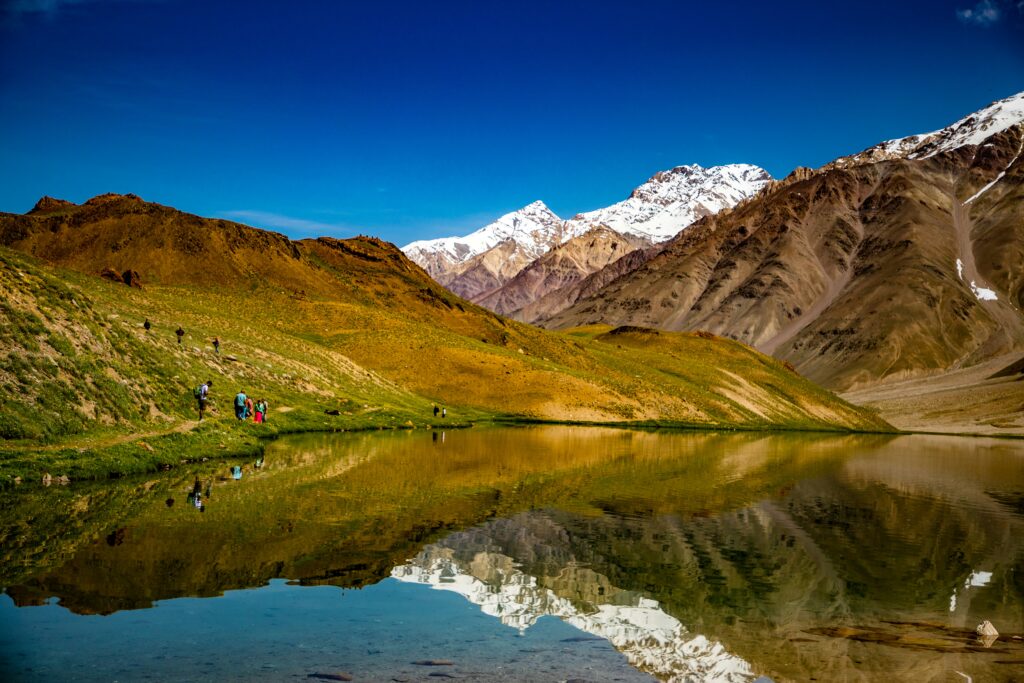
A crescent-shaped glacial lake at 4,300 metres, surrounded by snow-capped peaks. Chandratal is one of two high-altitude wetlands designated as Ramsar sites in India (External authority: en.wikipedia.org/wiki/Chandra_Taal). Camping beside it under a star-filled sky is one of India’s great nature experiences. Carry all your waste out — the ecosystem around the lake is extremely fragile.
Pin Valley National Park
Established in 1987 and covering 675 square kilometres, Pin Valley is a cold desert reserve and home to snow leopards, Siberian ibex, Himalayan blue sheep (bharal), red foxes, weasels, and pikas. The park shares a boundary with the Great Himalayan National Park World Heritage Site (External link: whc.unesco.org). Best visited May through September.
Langza, Hikkim, and Komic Villages
These three high-altitude villages form the must-do ‘village circuit’ above Kaza. Langza (4,400m) sits on an ancient seabed — marine fossils millions of years old can be found in the hillsides. Hikkim holds the world’s highest post office (4,440m). Komic is Asia’s highest motorable village and home to Tangyud Monastery with extraordinary 360-degree Himalayan views.
Dhankar Monastery and Lake
A 1,200-year-old monastery perched dramatically at the confluence of the Spiti and Pin rivers. A short uphill walk leads to the serene Dhankar Lake, framed by jagged peaks. One of Spiti’s most photogenic locations — shoot it at dusk when the light goes amber on the monastery walls.
Tabo Monastery — The Ajanta of the Himalayas
Founded in 996 CE, Tabo houses extraordinary 10th-century murals and clay sculptures. It has been on India’s Tentative UNESCO World Heritage list. The grounds are open to visitors and respectful overnight stays. The library at Tabo is considered one of the finest repositories of Tibetan Buddhist manuscripts in the Indian subcontinent.
IMAGE SUGGESTION: Ground-level photograph of Chandratal Lake at dusk, crescent shoreline in the foreground, snow-capped Himalayan peaks reflected in perfectly still turquoise water. No tents or tourists in frame. Alt text: Chandratal Moon Lake at dusk, Spiti Valley — reflection of snowy peaks in still water.
5. Wildlife and Nature: What Spiti’s Summer Reveals
Spiti is not a conventional wildlife destination. There are no game drives or guaranteed sightings. Instead, it offers something rarer — encounters with high-altitude fauna in a genuinely wild, largely undisturbed habitat.
Snow Leopard: The Ghost of the Mountains
Pin Valley National Park is one of the few places in India where you can realistically hope to catch a glimpse of snow leopards. Approximately 12 snow leopards inhabit the park. Sightings are rare but not impossible, particularly at dawn and dusk along the upper ridgelines above the Mud and Kungri villages. Local guides from Pin Valley — many of whom are trained community wildlife monitors — offer the best chance of a sighting.
Birds of the Cold Desert
In summer, rare birds flourish across Spiti: Himalayan snowcock, chukar partridge, snow partridge, snow finch, kestrel, golden eagle, chough, and migratory ruddy shelduck, which arrive at Chandratal and other high-altitude wetlands. Himalayan griffon vultures and lammergeiers (bearded vultures with wingspans over 2.5 metres) are regularly spotted soaring above the ridgelines. Birding walks along the Spiti River near Kibber are particularly productive in the early morning.
Himalayan Ibex and Bharal
Perhaps the most reliably visible large mammals in Spiti are the Himalayan ibex and the bharal (blue sheep). Both are adapted to near-vertical cliff faces and are commonly seen from the road between Kaza and Kibber, and along the slopes above Pin Valley. In summer, they graze on sparse alpine vegetation on south-facing slopes, often in groups of 10 to 30 animals. A pair of binoculars is invaluable here — 8×42 or 10×42 works best for open terrain.
INTERNAL LINK: For responsible wildlife watching tips that apply across high-altitude Indian ecosystems, see the best trekking places guide at natureroutes.in/best-trekking-places-near-mumbai-tungareshwar-temple/
6. Spiti Valley Summer Budget Breakdown 2026
Spiti is not an expensive destination by Indian standards — but it is not as cheap as the plains either. The remoteness creates real logistical costs. Here is a realistic budget for a 7-day Spiti Valley summer trip in 2026, covering three traveller types.
| Category | Budget (INR) | Mid-Range (INR) | Comfortable (INR) |
| Transport (Delhi-Spiti-Delhi) | 4,000 – 6,000 Bus + shared taxi | 9,000 – 12,000 Private taxi | 18,000 – 25,000 Flight + rented SUV |
| Accommodation (7 nights) | 3,500 – 5,000 Homestays/dorms | 7,000 – 11,000 Guesthouses | 15,000 – 22,000 Eco-camps |
| Food (7 days) | 2,500 – 3,500 Local dhabas | 4,000 – 5,500 Mix of local + cafes | 6,000 – 8,000 Cafes + guesthouses |
| Activities & Permits | 800 – 1,500 Entry fees, guides | 2,000 – 4,000 Guided treks, horses | 5,000 – 9,000 Wildlife guiding |
| Miscellaneous | 1,000 – 1,500 | 2,000 – 3,000 | 4,000 – 6,000 |
| TOTAL (7 Days) | 11,800 – 17,500 | 24,000 – 35,500 | 48,000 – 70,000 |
IMPORTANT: ATMs in Kaza are limited and frequently run out of cash during peak season. Carry a minimum of INR 10,000 in cash from Shimla or Manali before entering Spiti. Digital payments (UPI) work in some homestays and shops in Kaza town, but not reliably in remote villages.
7. Spiti Valley Season Comparison: When to Visit and Why
Use this table to match your travel style to the right window. Each season in Spiti offers a genuinely different experience.
| Season | Months | Temp (Day) | Both Routes Open? | Best For | Rating |
| Early Summer | May-Jun | 12-20 C | Shimla only (Jun: both) | Solitude, nature, acclimatisation | Excellent |
| Peak Summer | Jul-Aug | 15-22 C | Yes (both open) | Festivals, circuit trips, full access | Good (busy) |
| Post-Monsoon | Sep-Oct | 8-18 C | Yes (Oct: Shimla only) | Photography, wildlife, clear skies | Excellent |
| Winter | Nov-Feb | -10 to 2 C | Shimla only (limited) | Snow leopard tracking (expert only) | Expert Only |
| Spring Thaw | Mar-Apr | 2-12 C | Shimla route only | Off-season, solitude, spring light | For Explorers |
8. Altitude Safety, AMS, and Essential Health Tips for Spiti in Summer
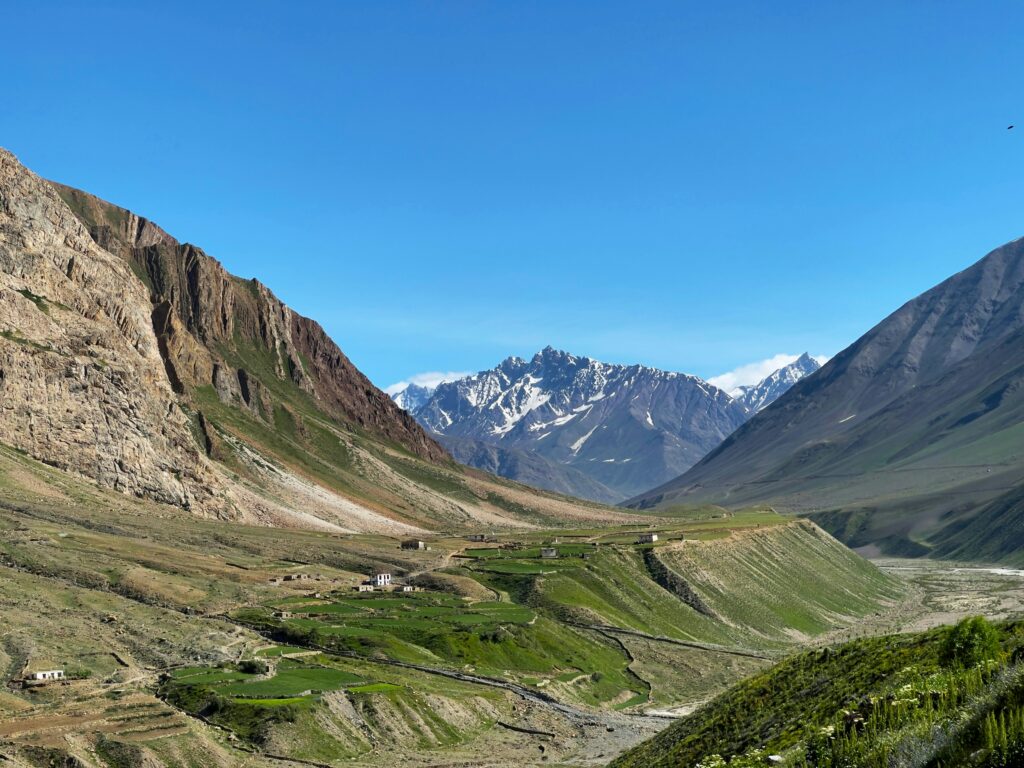
Altitude sickness is the single biggest risk factor for Spiti Valley visitors. Spiti’s terrain begins at 3,500 metres and climbs to over 4,500 metres at major passes. Most visitors travelling from sea level will experience some symptoms — mild headaches, fatigue, disturbed sleep — in the first 24 to 48 hours.
Recognising Acute Mountain Sickness (AMS)
Mild AMS symptoms include headache, nausea, dizziness, and loss of appetite. These typically resolve within 24 hours with rest and hydration. Severe AMS — characterised by confusion, difficulty breathing at rest, and loss of coordination — requires immediate descent. Descending just 500 metres can make a dramatic difference.
Acclimatisation Tips That Actually Work
- Take the Shimla route for your first visit — the gradual altitude gain is gentler on your body than the Manali approach.
- Spend at least one full night in Nako or Tabo before pushing to Kaza (both around 3,600m).
- Drink 3-4 litres of water daily. Altitude dehydrates you faster than you notice.
- Avoid alcohol on the first two days at altitude. It worsens dehydration and masks AMS symptoms.
- Do not rush. Build rest days into your itinerary — Spiti rewards slow travel anyway.
- Consult your doctor before travel about Diamox (Acetazolamide) for AMS prevention.
EMERGENCY CONTACT IN SPITI VALLEY
The nearest full hospital is in Recong Peo (Kinnaur) on the Shimla side, or Manali on the western side. Kaza has a small government hospital. Always carry travel insurance that covers high-altitude evacuation. Himachal Pradesh emergency number: 1077.
9. Complete Packing Checklist for Spiti Valley in Summer
Pack light but pack smart. Spiti’s remoteness means you cannot resupply easily once you leave Kaza.
Clothing & Protection
- T-shirts (3-4) plus thermal base layer — nights below 5 degrees C even in August
- Fleece mid-layer and windproof/waterproof outer shell jacket
- Warm sleeping bag rated to -5 degrees C minimum (for camping at Chandratal)
- UV-blocking sunglasses — glacial glare at altitude is severe
- High-SPF sunscreen (SPF 50+) — reapply every 2 hours
- Sturdy waterproof trekking boots with ankle support
Health & Safety
- Altitude sickness medication — consult your doctor for Diamox prescription
- First aid kit: blister treatment, ORS sachets, antacids, digital thermometer
- Reusable water bottle (2 litre minimum) — drink 3-4 litres daily at altitude
- Hand sanitiser and basic toiletries — water supply is limited in villages
Tech & Navigation
- Power bank (20,000 mAh minimum) — electricity is limited and solar-dependent in many villages
- Offline maps (Maps.me or Google Offline) — mobile data only in Kaza on Jio/Airtel
- Camera with extra batteries — cold drains battery life rapidly at altitude
- Binoculars (8×42 or 10×42) — essential for wildlife spotting
Money & Documents
- Cash minimum INR 10,000 — ATMs scarce and frequently empty during peak season
- Valid photo ID (Aadhaar or passport) — military checkpoints are common
- Travel insurance covering high-altitude evacuation
- Zero-waste kit: reusable cutlery, cloth bags, small trash bag for your waste
10. Pros and Cons of Visiting Spiti Valley in Summer
| PROS of Summer in Spiti | CONS of Summer in Spiti |
| Both routes (Shimla & Manali) fully open | July-August sees highest tourist volume |
| All monasteries, villages, and parks accessible | Chandratal camps become crowded in August |
| Wildflowers and green alpine meadows | Landslide risk on Manali route July-August |
| Chandratal Lake reachable by road | Accommodation books up fast — reserve early |
| Homestays and local services fully operational | ATMs frequently run dry in peak season |
| Wildlife active and more visible during day | Some passes may close temporarily after rain |
| Local festivals coincide with peak months | Higher prices vs. shoulder season months |
11. Final Thoughts: Why Spiti Valley in Summer Is India’s Most Rewarding Nature Journey
Spiti Valley in summer offers something increasingly rare in Indian travel — a place that demands something from you. The roads challenge your patience. The altitude demands your body’s respect. The landscape refuses to be captured in a single photograph. As a result, Spiti gives back in proportion to what you bring: curiosity, time, and genuine slowness.
The monasteries contain centuries of human thought and artistic effort. Pin Valley’s wildlife reminds you that the Himalayas are still alive with creatures that have never needed human attention to thrive. And on a clear September morning at Chandratal, with the still water reflecting nothing but mountains and sky, it becomes very clear why this valley has been drawing travellers — monks, traders, explorers, and now nature-seekers — for a thousand years.
Plan your Spiti Valley summer trip in 2026 with care, travel with a light footprint, and give yourself enough time to do it properly. Seven days is the minimum; ten is ideal. The valley does not reward rushing — but it will absolutely reward returning.
Ready to start planning? Explore our full collection of nature travel guides at NatureRoutes.in.
12. Frequently Asked Questions About Spiti Valley in Summer
Is Spiti Valley safe to visit in summer?
Yes, Spiti Valley is safe to visit in summer (May to September). The primary risks are altitude sickness and road conditions due to landslides on the Manali route in July-August. Acclimatise properly, carry adequate cash and medication, and inform someone of your itinerary before entering remote areas. Crime rates are extremely low and locals are known for their exceptional hospitality.
Do Indian tourists need a permit to visit Spiti Valley?
Indian citizens do not need a special permit to visit popular Spiti areas including Kaza, Key Monastery, Kibber, Langza, Hikkim, and Pin Valley National Park. However, foreign nationals require an Inner Line Permit (ILP), obtainable from the District Magistrate’s office in Shimla, Reckong Peo, or Kaza. Always carry a valid government-issued photo ID as military checkpoints are common throughout Spiti.
What is the best base for exploring Spiti Valley in summer?
Kaza is the administrative capital of Spiti and the best base for summer exploration. It has the valley’s best selection of homestays, guesthouses, local cafes, ATMs, and a small market. From Kaza, all major attractions — Key Monastery, Kibber, Langza, Hikkim, Komic, Dhankar, and Pin Valley — are within 1 to 2 hours by road. Most travellers spend 3 to 4 nights in or near Kaza town.
Can I see snow leopards in Spiti Valley in summer?
Snow leopard sightings in summer are rare but not impossible in Pin Valley National Park. The cats tend to move to higher elevations in summer, following their prey. Winter (December-February) offers the best chance of sightings. In summer, hiring a trained local wildlife guide from the Mud village community significantly improves your odds of spotting signs of their presence — pugmarks and scratching posts are the most common evidence.
How many days are enough for a Spiti Valley summer trip?
A minimum of 7 days is recommended for a meaningful Spiti Valley summer trip. This allows 2 days for travel via either route, 3 to 4 nights in the Kaza area for exploration, and a day for Chandratal Lake and the Manali exit. Ten days is ideal for a complete circuit with ample time at Tabo, Pin Valley, and the Kinnaur region. Rushing through Spiti in 4 to 5 days means missing the valley’s depth entirely.
Is the Manali-Kaza route open in May 2026?
The Manali-Kaza route via Kunzum Pass typically opens between late May and early June, depending on the year’s snowmelt. In May 2026, most travellers should plan to use the Shimla-Kinnaur-Kaza route, which remains open throughout the year. Check Himachal Pradesh road condition updates from the state PWD website or local travel groups before departure, as pass-opening dates vary annually by 2 to 4 weeks.
What type of vehicle is best for Spiti Valley in summer?
A high-clearance 4WD SUV is strongly recommended for Spiti Valley, especially on the Manali route and for reaching remote villages like Mud in Pin Valley. Popular choices include the Mahindra Thar, Scorpio, Toyota Fortuner, or Bolero. Many travellers hire locally-driven taxis from Shimla or Manali — experienced local drivers know the road conditions intimately and are a worthwhile investment for safety.