
Why Best places to visit in monsoon in Maharashtra Come Alive During the Monsoon Season
Best places to visit in the monsoon in Maharashtra include Lonavala, Mahabaleshwar, Bhandardara, Malshej Ghat, Kaas Plateau, and Matheran, where waterfalls, misty valleys, and green hills of the Western Ghats offer the state’s most rewarding travel experience between June and September.
If you have ever watched the Sahyadri hills turn from dusty brown to deep emerald within days of the first showers, you already understand why locals plan their entire year around this season. Maharashtra’s monsoon is not a side note to travel here; it is the main event, and this guide walks through exactly where to go, how to get there, and how to stay safe while doing it.
Monsoon tourism in Maharashtra refers to travel undertaken between June and September, when the Western Ghats receive heavy seasonal rainfall, transforming hill stations, forts, and valleys with flowing waterfalls, low-hanging clouds, and dense greenery.

Maharashtra sits along the western edge of the Deccan Plateau, right where the Arabian Sea’s moisture-laden winds crash into the Sahyadri range. This geography is exactly why the state’s monsoon scenery feels so dramatic. Ridges that look ordinary in summer suddenly sprout dozens of seasonal waterfalls, and valleys fill with a mist that rolls in and out within minutes.
For travellers based in Mumbai or Pune, this means a genuinely spectacular landscape is often within a two- to four-hour drive. However, the same rain that creates the beauty also demands a bit more planning than a typical winter getaway. That is exactly what the rest of this guide covers.
Best Places to Visit in Monsoon in Maharashtra Near Mumbai and Pune
If you only have a weekend, these three destinations deliver maximum monsoon drama with minimum travel time. All of them sit along the Mumbai–Pune corridor, making them ideal for a quick escape.
Lonavala and Khandala
Lonavala and its twin hill town Khandala remain the most visited monsoon destinations in the state, and for good reason. Bhushi Dam, Tiger’s Leap, and Lion’s Point all take on a completely different character once the rains arrive, with waterfalls cascading over rocks that stay bone dry for the rest of the year.
Weekday visits are strongly recommended here. Weekend traffic on the Mumbai-Pune Expressway during peak monsoon months can add hours to what should be a 90-minute drive, so plan your route and timing accordingly.
Matheran
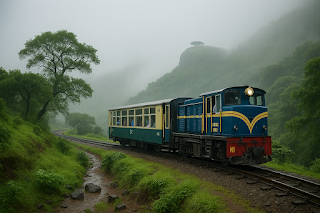
Matheran is Asia’s only automobile-free hill station, which makes it a uniquely peaceful monsoon retreat. Vehicles are banned inside the town, so visitors either walk or take a horse or hand-pulled rickshaw to reach viewpoints like Panorama Point and Echo Point.
The famous narrow-gauge toy train to Matheran is often suspended during heavy monsoon months due to landslide risk, so it is worth checking current status before you plan a train journey rather than a road trip via Neral.
Tamhini Ghat
Tamhini Ghat, located between Pune and the Konkan coast, is one of the most photographed monsoon drives in Maharashtra. The road winds through dense forest with dozens of roadside waterfalls appearing directly beside the tarmac.
Adventure travellers combining a Tamhini Ghat visit with a short trek often continue toward nearby trails; our detailed guide to the best trekking places near Mumbai covers several monsoon-friendly options in the same region.
The best places to visit in monsoon in Maharashtra’s Hill Stations
Western Maharashtra’s older hill stations were originally developed as colonial-era retreats specifically to escape the heat, and monsoon remains their most atmospheric season.
Mahabaleshwar and Panchgani
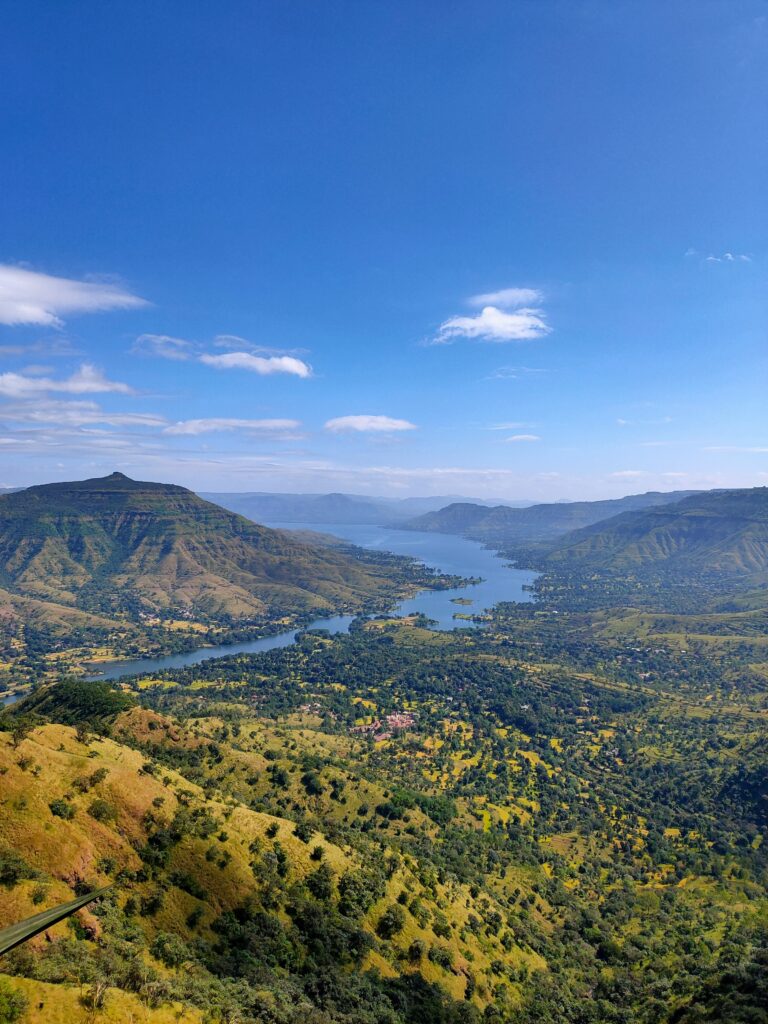
The best places to visit in monsoon in Maharashtra – Mahabaleshwar and neighbouring Panchgani sit at over 1,300 metres, which keeps daytime temperatures pleasantly cool even in peak monsoon. Wilson Point, Arthur’s Seat, and the Venna Lake area are popular, though the real highlight is simply driving between viewpoints as clouds drift across the valley floor below.
This region is also known for its strawberry farms, and while the fruiting season itself runs earlier in the year, several farm cafes stay open through the monsoon and are worth a stop for a warm meal.
Kaas Plateau, Satara
The best places to visit in monsoon in Maharashtra -Kaas Plateau, roughly 25 kilometres from Satara, is one of India’s most unusual monsoon destinations. Rather than peaking during the heaviest rains, it reaches its full glory just after the monsoon eases, typically from late August through October, when the plateau erupts into a carpet of wildflowers.
This basaltic tableland was recognised as part of a UNESCO World Natural Heritage Site in 2012 as part of the Western Ghats cluster, and it now hosts over 850 documented species of flowering plants, some found nowhere else on earth.
Daily visitor numbers are capped to protect this fragile ecosystem, so it is worth checking current entry rules on the official Maharashtra Tourism website before planning your trip.
Bhandardara
Bhandardara offers a quieter alternative to Lonavala’s crowds while delivering equally impressive scenery. The Wilson Dam backwaters, Umbrella Falls, and Randha Falls are all easily accessible, and the surrounding Kalsubai range, home to Maharashtra’s highest peak, adds a dramatic backdrop for photography.
Offbeat and Lesser-Known Monsoon Destinations in Maharashtra
For travellers who have already covered the popular circuit, these destinations offer monsoon scenery without the crowds.
Malshej Ghat
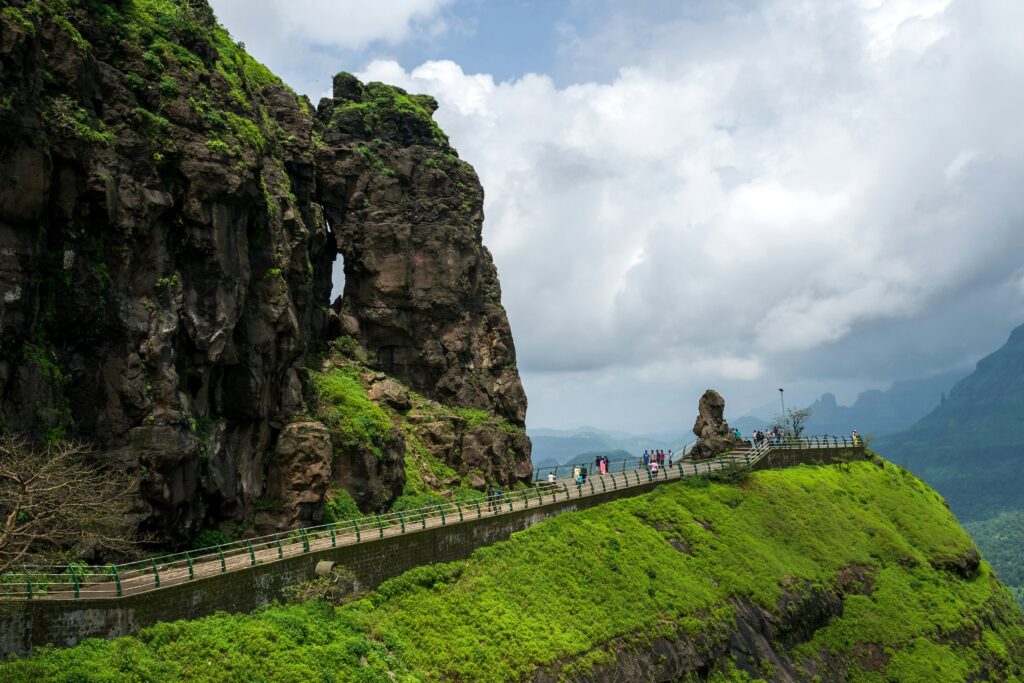
The best places to visit in monsoon in Maharashtra -Malshej Ghat, tucked between Pune and Nashik, is known for cascading roadside waterfalls and, notably, flocks of flamingos that visit nearby wetlands during the season. Low clouds frequently roll directly through the ghat road, creating a genuinely immersive driving experience.
Amboli Ghat
The best places to visit in the monsoon in Maharashtra -Amboli, in the Sindhudurg district near the Maharashtra-Karnataka-Goa border, receives some of the heaviest rainfall in the state. It is a haven for biodiversity enthusiasts, with rainforest walks, dozens of waterfalls, and a rare natural bioluminescent fungi phenomenon that appears on the forest floor on certain monsoon nights.
Igatpuri
The best places to visit in the monsoon in Maharashtra – Igatpuri combines monsoon scenery with a meditative pace, thanks to its well-known Vipassana International Academy. The Bhatsa River Valley viewpoint and the trek to Kalsubai Peak base village both make for rewarding day trips, and the town’s lake views are especially striking under monsoon skies.
Travellers interested in exploring further off the beaten path can also refer to our roundup of hidden nature trails across India for additional monsoon-season inspiration beyond Maharashtra.
How to Plan a Monsoon Trip in Maharashtra: Step-by-Step
- Check the India Meteorological Department forecast for your travel dates and route, especially for ghat sections prone to landslides.
- Choose a destination based on travel time: weekend trips suit Lonavala, Matheran, or Tamhini Ghat, while longer trips suit Mahabaleshwar or Amboli.
- Book accommodation in advance during July and August weekends, when demand for hill-station stays peaks.
- Confirm whether specific attractions, such as the Matheran toy train or certain fort treks, are operational during your visit.
- Pack for both rain and sun, since monsoon weather in the Sahyadris can shift within the same afternoon.
- Plan flexible timing, leaving buffer hours for slow-moving ghat traffic and possible short closures.
- Carry cash and download offline maps, as connectivity can be patchy in remote monsoon destinations.
Budget Breakdown for a Weekend Monsoon Getaway
A two-day, one-night trip from Mumbai or Pune to a destination like Lonavala or Bhandardara typically costs between ₹4,000 and ₹8,000 per person, covering fuel or shared transport, mid-range accommodation, and meals. Budget travellers using shared cabs or state transport buses and opting for homestays can bring this down to roughly ₹2,500 to ₹3,500 per person, while a more comfortable stay with a private cab pushes the total closer to ₹10,000.
Safety Tips for Monsoon Travel in Maharashtra
Monsoon travel in the Western Ghats is rewarding, but the same rain that creates the scenery also raises real risks. A little caution goes a long way.
Trekking and Waterfall Safety
- Avoid standing directly under waterfalls or on wet rocks near the edge of pools; currents are far stronger than they appear.
- Skip trekking on notified high-risk routes during red or orange rainfall alerts.
- Carry a basic first-aid kit and inform someone of your planned route and return time.
- Wear grip-soled footwear rather than regular sneakers on wet, mossy trails.
Driving on Ghat Roads
- Keep headlights on and maintain distance in low-visibility fog patches common on ghat sections.
- Avoid crossing flooded low-lying stretches, even if the water looks shallow.
- Service brakes and wipers before a monsoon road trip, and carry a torch and basic emergency kit.
- Check ghat road advisories, since some sections are periodically closed by local authorities after heavy rainfall.
Best Places to Visit in Monsoon in Maharashtra: Quick Comparison Table
Use this table to quickly compare distance, travel time expectations, and what each destination is best known for.
| Destination | From Mumbai | From Pune | Best For | Ideal Duration |
| Lonavala & Khandala | 83 km | 64 km | Waterfalls, valley views, easy day trips | 1 day |
| Matheran | 100 km | 120 km | Vehicle-free hill station, misty viewpoints | 1–2 days |
| Tamhini Ghat | 115 km | 60 km | Waterfall drives, monsoon photography | 1 day |
| Mahabaleshwar & Panchgani | 265 km | 120 km | Strawberries, viewpoints, cool climate | 2–3 days |
| Kaas Plateau, Satara | 278 km | 125 km | Wildflower blooms, UNESCO biodiversity site | 1 day (post-monsoon peak) |
| Bhandardara | 165 km | 170 km | Waterfalls, dam views, quiet nature stays | 2 days |
| Malshej Ghat | 130 km | 150 km | Flamingos, cascading waterfalls, cloud cover | 1–2 days |
| Amboli Ghat | 450 km | 300 km | Rainforest walks, bioluminescence, waterfalls | 2 days |
| Igatpuri | 130 km | 135 km | Vipassana retreats, lakes, monsoon treks | 1–2 days |
Monsoon Travel Checklist for Maharashtra
- Waterproof jacket or poncho, plus a dry bag for electronics
- Quick-dry clothing and a spare set in a waterproof pouch
- Grip-soled trekking shoes or sandals
- Power bank, offline maps, and printed or saved accommodation confirmations
- Basic first-aid kit and any personal medication
- Mosquito repellent, since standing water increases insect activity
- Cash in small denominations for remote areas with limited card acceptance
- Reusable water bottle and light snacks for long ghat drives
Pros and Cons of Visiting Maharashtra in Monsoon
| Pros of Monsoon Travel | Cons of Monsoon Travel |
| Waterfalls and valleys are at their fullest and most dramatic. | Landslides and slippery ghat roads can disrupt travel plans. |
| Cooler temperatures make sightseeing more comfortable. | Some trekking routes and forts are closed for safety. |
| Fewer crowds compared to the October–May peak season | Persistent rain can limit outdoor photography windows. |
| Hotel tariffs are often lower than in peak season. | Fog and low visibility can slow down driving. |
| Lush greenery transforms the Western Ghats visually | Some remote villages have limited connectivity during heavy rain. |
Conclusion
Maharashtra’s monsoon transforms familiar hills into some of the most striking landscapes in India, and the destinations covered here, from the accessible waterfalls of Lonavala to the rare wildflower carpet of Kaas Plateau, each offer a distinct reason to travel between June and September. The season does call for extra planning around road conditions, trek closures, and shifting weather, but for travellers willing to prepare a little, it consistently delivers Maharashtra’s most memorable scenery. Pick a destination that matches your available time, keep the safety guidelines in mind, and the monsoon will reward you with views that simply do not exist the rest of the year.
Frequently Asked Questions
Which is the best place to visit in Maharashtra during monsoon?
Lonavala and Khandala are the most accessible options from Mumbai and Pune, while Mahabaleshwar and Bhandardara suit travellers wanting a longer, quieter getaway with equally dramatic waterfalls.
Is it safe to travel to Lonavala or Mahabaleshwar during monsoon?
Yes, both are generally safe for road travel and sightseeing, provided you avoid waterfall edges during heavy rain, check local weather alerts, and drive cautiously on ghat sections during fog or heavy downpours.
What should I pack for a monsoon trip in Maharashtra?
Pack a waterproof jacket, quick-dry clothing, grip-soled footwear, a dry bag for electronics, and a basic first-aid kit, along with cash for areas with limited digital payment access.
Which waterfalls are best to visit near Mumbai and Pune in monsoon?
Bhushi Dam and Kune Falls near Lonavala, the roadside waterfalls along Tamhini Ghat, and Umbrella Falls near Bhandardara are among the most rewarding options within a few hours of both cities.
When does the monsoon season start and end in Maharashtra?
The southwest monsoon typically reaches Maharashtra in early June and continues through September, with July and August usually bringing the heaviest rainfall across the Western Ghats.
Is Kaas Plateau open during the monsoon or only after it?
Kaas Plateau is accessible through the monsoon, but its famous wildflower bloom peaks just after the heaviest rains ease, typically from late August through October, so timing your visit for that window is worthwhile.
What is the ideal budget for a monsoon weekend trip from Mumbai?
A comfortable weekend trip to a destination like Lonavala or Bhandardara typically costs between ₹4,000 and ₹8,000 per person, though budget-conscious travellers using shared transport and homestays can manage it closer to ₹3,000.